
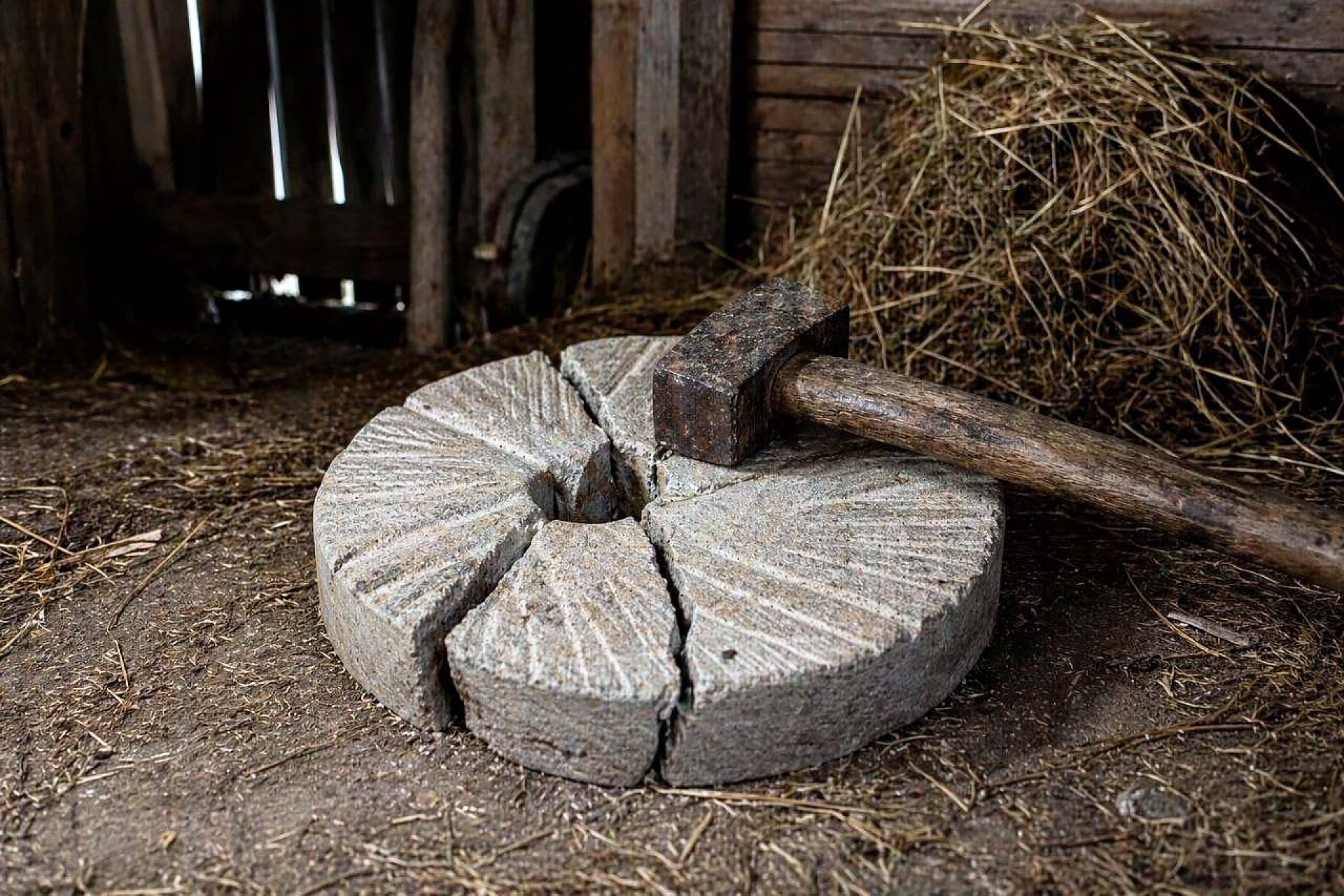
Stone milling is impossible without millstones. Yet in Ukraine’s history, there was a time when the very stone that turned grain into flour was outlawed — and simply owning it could put a household at risk.
At the core of The Miller stone mill systems are millstones. They determine both the preservation of grain’s nutritional value and the structure of the flour. Today, they are often seen as part of tradition, craftsmanship, and aesthetics. But history shows a different reality: there were periods when millstones were not just tools, but a vital means of survival — and a symbol of resilience.
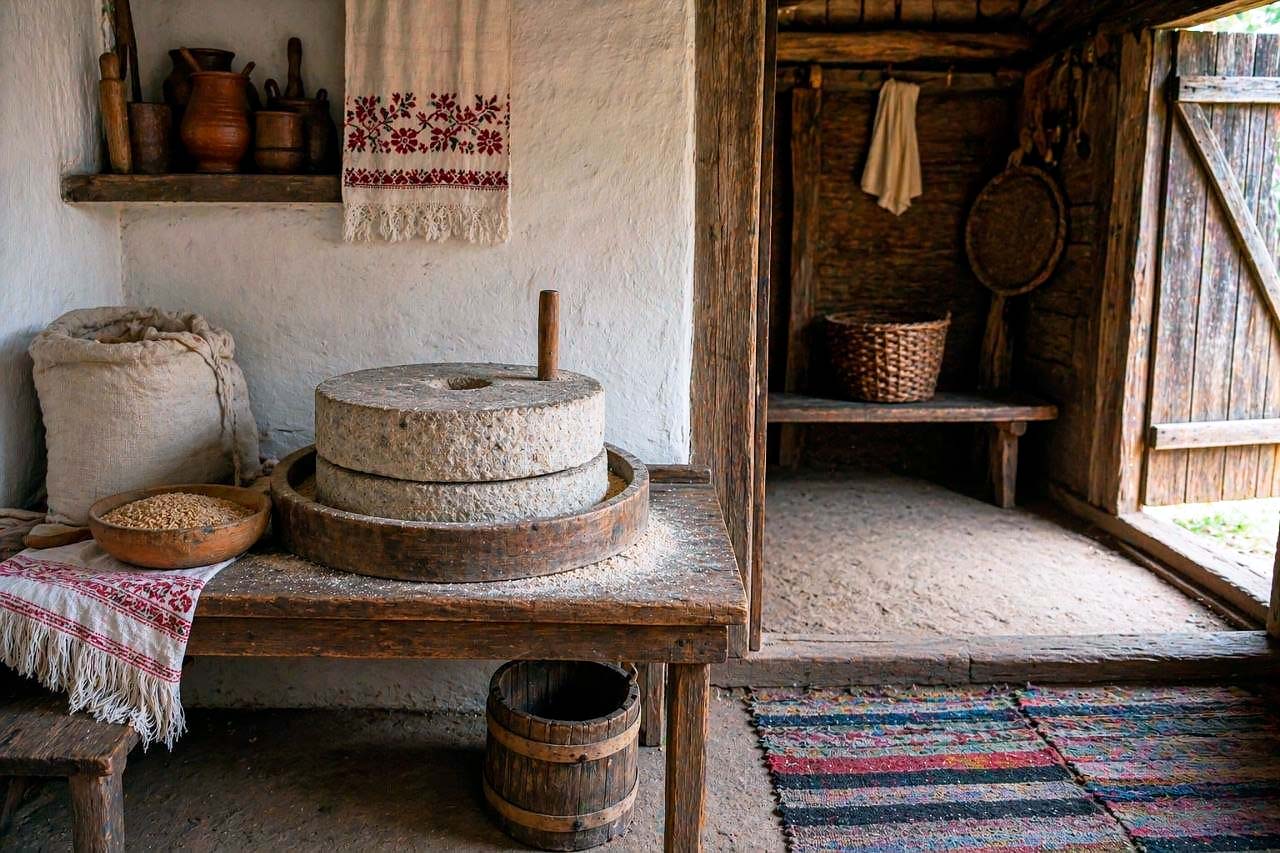
Grain milling was often tied to a local flour mill, where residents from nearby settlements brought their harvest. This created dependence: to mill grain, people had to organize transport, travel distances, wait in line, and pay a share of their product to the mill owner or the state.
Home millstones changed that. They allowed households to mill grain into flour, produce coarse meal, and in difficult times process even things that could barely be called grain. This provided a level of autonomy — the ability to mill grain at any moment and maintain control over a basic need. Over time, this independence became a direct target of the state system.
In the late 1920s and early 1930s, during collectivization in Soviet Ukraine, the state imposed strict control over production and food distribution. Rural flour mills and access to milling were placed under state or collective control. Grain was confiscated through procurement quotas, and the milling process was monitored. As a result, using a public mill without permission became nearly impossible.
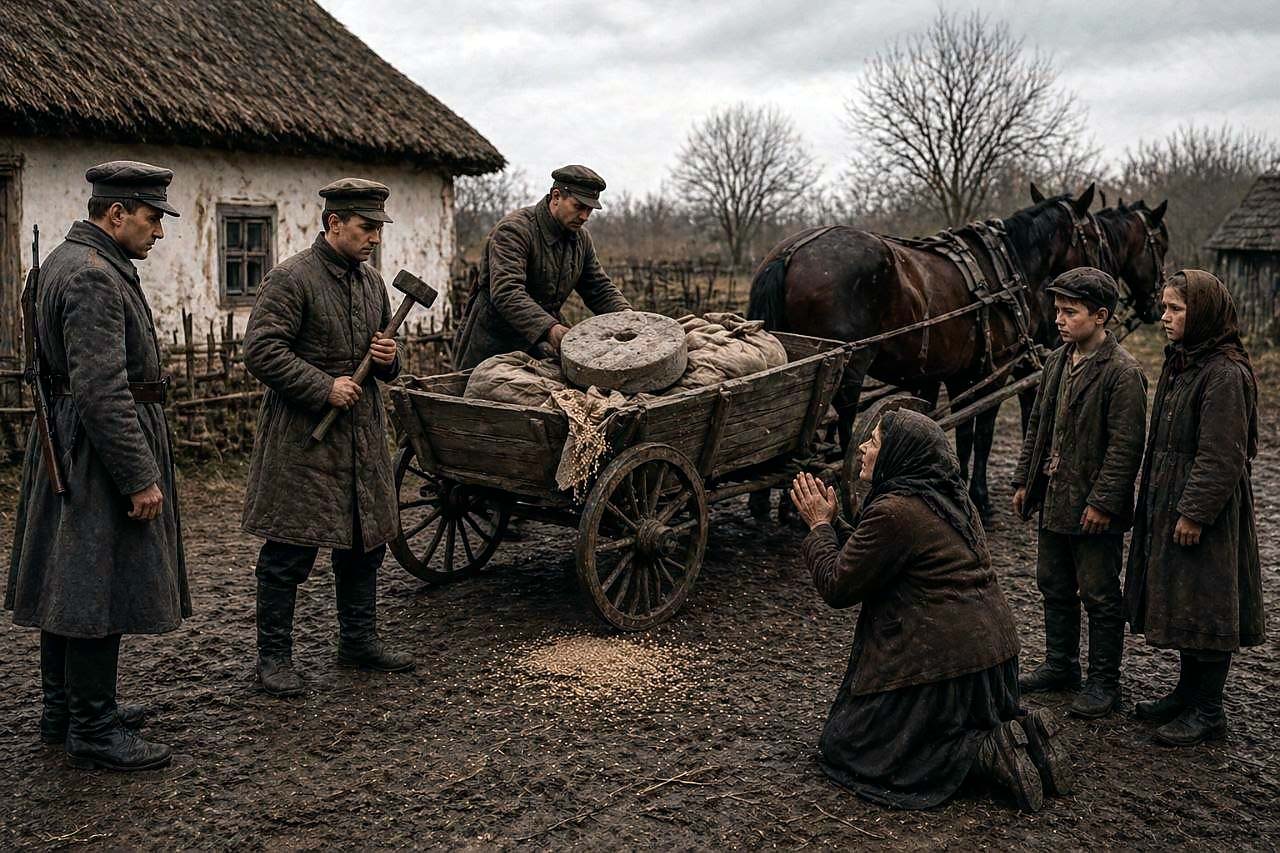
Home milling became the only way to mill grain and maintain access to food. However, it was also restricted. So-called requisition brigades conducted systematic searches, removing grain and milling tools — especially millstones.
Historical records, including those preserved by the National Museum of the Holodomor-Genocide, confirm that not only grain but also tools used to mill grain were confiscated. Even attempts to mill grain privately were subject to punishment. These measures removed the ability to produce food independently and became one of the factors that led to the Holodomor famine.
Testimonies from that period describe:
Systematic searches of homes and land
Destruction of millstones destroyed in front of starving children
Persecution for simply owning milling tools
People hid millstones in cellars, walls, and underground spaces. In many cases, they were shared secretly between families. Milling became an act carried out under constant risk. Sound itself became a threat. In the silence of rural areas, the sound of grinding could be heard from a distance. To reduce it, millstones were wrapped in cloth or placed on soft surfaces. Lookouts — often children — watched for danger.
There are accounts of mothers grinding wild plants at night, masking the sound with singing so it would not be noticed. Millstones were often separated: the upper and lower stones hidden in different places to reduce the risk of total loss. Even a single remaining stone could still be used to grind food.
In some villages, a single set of millstones became a shared resource — a critical point for survival. People brought anything that could be ground: wild plants, roots, or grains. A simple phrase from that time carried real weight: “The millstones were destroyed.” For a family, this often meant losing the ability to turn anything into food.
Museum records describe attempts to replace stone millstones with wooden substitutes. Whether widespread or not, one fact remains clear: when millstones were removed, people searched for any possible replacement. The result was inferior, but survival mattered more than quality.
According to the National Museum of the History of Ukraine, makeshift grinding tools were used in some regions just to obtain minimal flour. During the famines of the 20th century, millstones saved countless lives.
Grain in storage is just a resource. Once it passes through millstones, it becomes food. This transformation is what authorities attempted to control. The system removed grain, restricted the ability to mill grain, and confiscated tools. This eliminated the ability to sustain life independently.
Physical: removing the ability to prepare food
Psychological: removing the sense of control
Each rotation of the stone became an act of resistance. Those who continued to mill grain were defending not only survival, but dignity.
Today, some families still preserve millstones passed down through generations. Others restore old grain mills or seek to maintain and repair them. This is not only memory — it is continuity. A stone mill today is no longer about survival. Yet its relevance remains. It represents:
Autonomy: the ability to choose how and when to mill grain
Quality: whole grain flour that preserves nutritional value
Continuity: a return to a technology that endured
In a country where millstones were once destroyed, they are now produced again — using durable materials, traditional principles, and modern standards. By creating stone mills, we restore a tool that has always represented strength and independence.