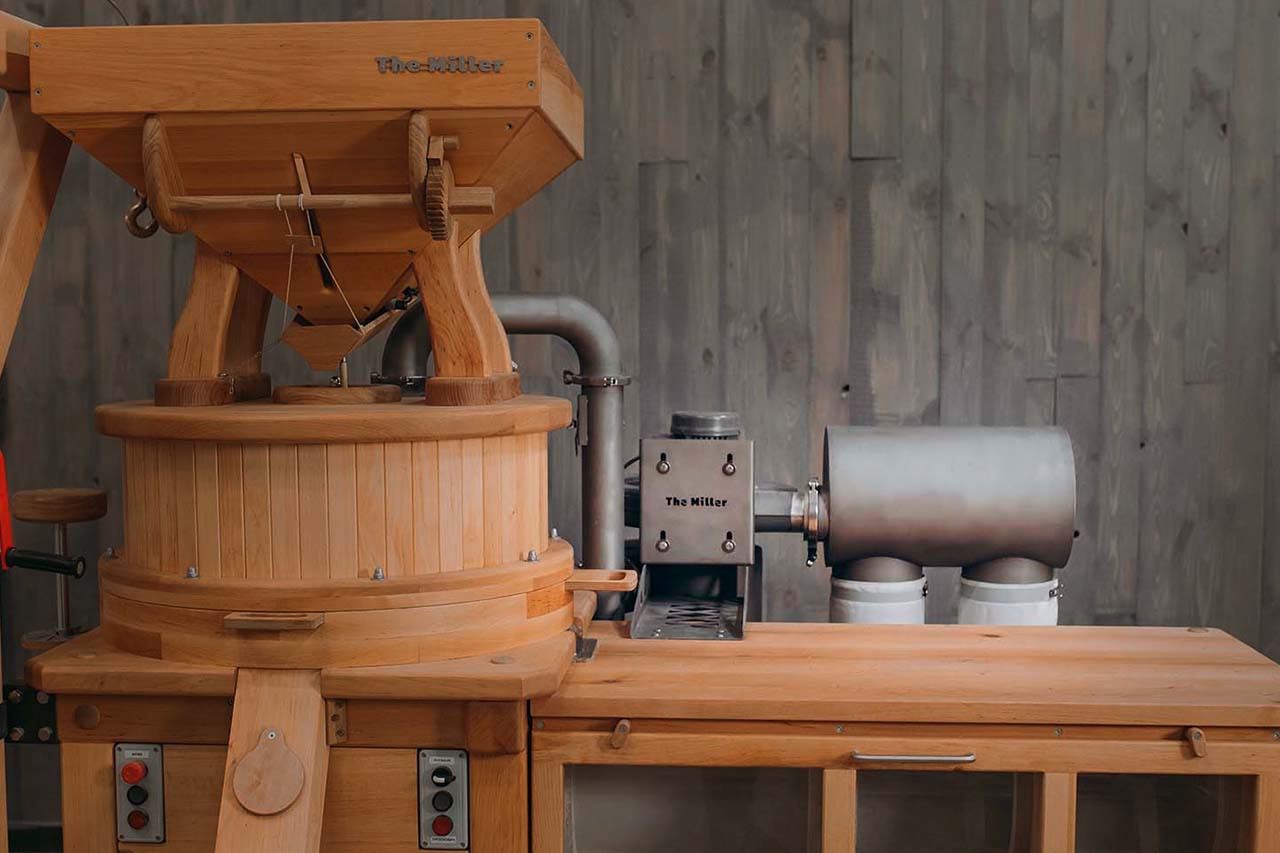
Have you ever watched how selected grain turns into aromatic, soft and naturally fragrant flour right in front of you? There is something special about this process, but anyone who has ever been in a flour milling environment also knows its other side — flour dust.
As soon as it appears, within seconds one part remains suspended in the air, while another settles on every surface. At The Miller, we believe that the full value of the grain should remain in the final product — not dispersed into the air during the process. In this article, you will learn how a dedicated aspiration system for flour mills helps control the dust dispersion, reduces dust spread during the process, helps prevent accumulation in the working area, minimizes unwanted heat, and protects equipment components from fine particle impact.
Clean production is a reality.
To understand why a proper extraction solution is essential for a flour mill, it is important to look at the nature of the process itself. These fine particles are extremely light and rise instantly during milling. Without proper control, they behave in the following way:
Aerosol effect: The finest particles can remain suspended in the air for hours. Standard ventilation is not enough to remove them. As a result, workers forced to breathe in this constant cloud.
Surface contamination: Fine debris gradually settles on everything — tools, storage areas, finished goods, and every mill grain surfaces. Even in a clean facility, this creates discomfort and a sense of disorder.
Deep penetration: Dust can enter small gaps and accumulate in mechanical components of grain mills, affecting the stability of equipment operation.
Biological risks: When combined with moisture, organic flour particles can form dense deposits in hard-to-reach areas. Over time, this can create conditions for mold or food moths.
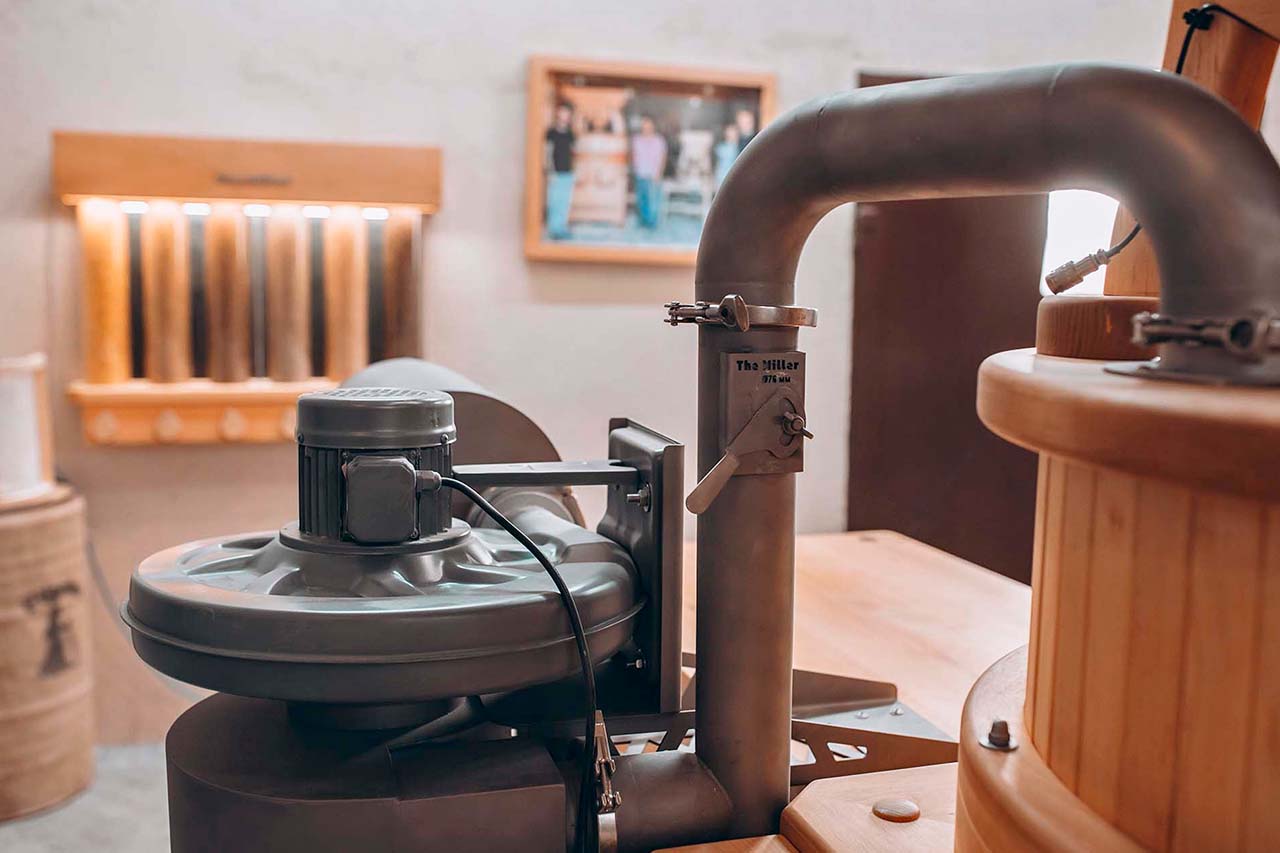
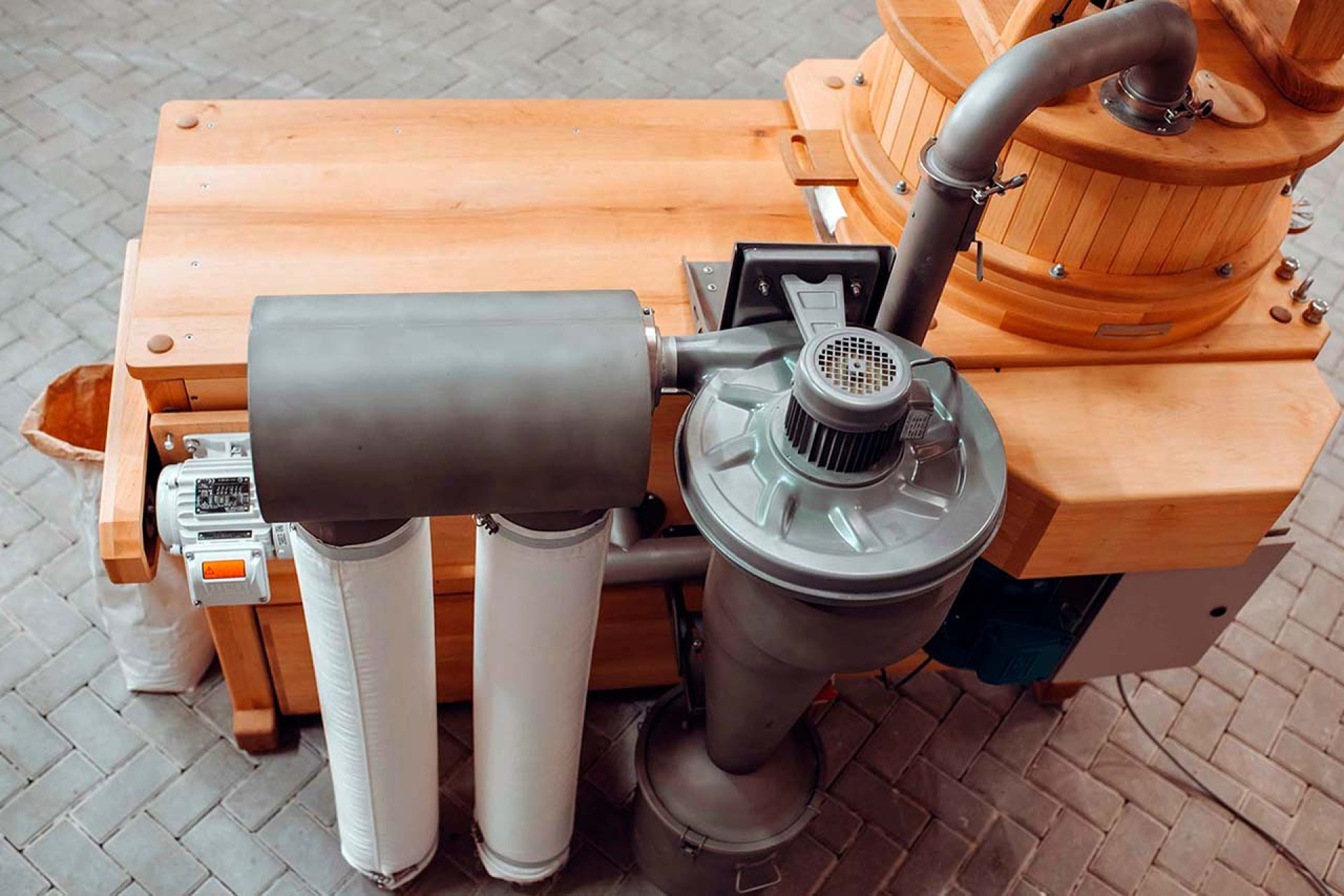
Our solution works like a protective barrier. It captures flour particles directly at the source and prevents it from spreading beyond the flour mill and sifter.
Point capture: Depending on the grain mill's configuration, one or two collection points are used. Particles are extracted directly from the milling chamber and from the sifter, where wholegrain flour is separated into fractions.
Cyclone separation: The airflow is directed into a cyclone, where the aspiration system separates and collects material in a sealed container. This collected flour can be fully reused in baking.
Smart recirculation system: The filtered stream is returned into the workspace. This helps retain heat during colder periods and helps cool the milling zone during operation.
This is a key concern for producers focused on product quality and nutritional value. When millstones operate, friction naturally generates heat. If the temperature exceeds 40°C, nutrients and enzymes may begin to degrade.
Typically, this is controlled by reducing the load on the mill or operating intermittently. However, the aspiration system allows continuous operation. Airflow removes excess heat directly from the mill's grain zone. The result is fresh, aromatic flour with stable quality parameters — without flour dust in the air.
Important note: Not every aspiration system can handle fine particles effectively. The Miller system is designed with these factors in mind to maintain stable performance throughout the entire milling process without additional interruptions.
Today, the concept of open production is about transparency. When customers see a clean and well-organized mill even after long operation, it builds trust in both the product and the producer.
You are not just selling bread — you are demonstrating a culture of controlled production. The use of aspiration helps maintain a clean working environment and can support production practices aligned with HACCP principles. Dust remains contained within a closed system, helping reduce its spread within the production.
This reduces cleaning time and allows the facility to maintain a more organized, professional appearance throughout all stages of milling.